
Categories : Auto Diagnostic Systems | Smart Devices | Networking Tools | Surveillance Systems

In recent years, the integration of technology within educational settings has significantly reshaped traditional teaching methods. The concept of smart school solutions epitomizes this transformation, offering a suite of advanced tools designed to enhance learning experiences and streamline educational processes. At the core of these solutions lies the principle of leveraging technology to create more engaging, efficient, and personalized educational environments.
Based on J-Style Wearables and Data Hub, the smart school solution is quite popular now. We can track the performance of the students for overall lifestyle assessment, thus establishing a health campus management information network platform through mobile Internet, big data, cloud computing, smart terminals, remote health management, and other technologies to systematically manage the physical and mental health of students.
Historically, educational technology has evolved from basic tools like overhead projectors and desktop computers to more sophisticated systems such as interactive whiteboards and online learning platforms. The current state of smart school solutions extends beyond these earlier innovations, incorporating cutting-edge advancements in wearable technology and data analytics. These advancements enable educators to better understand student needs, tailor instruction methods, and foster an interactive learning atmosphere.
Solution Architecture
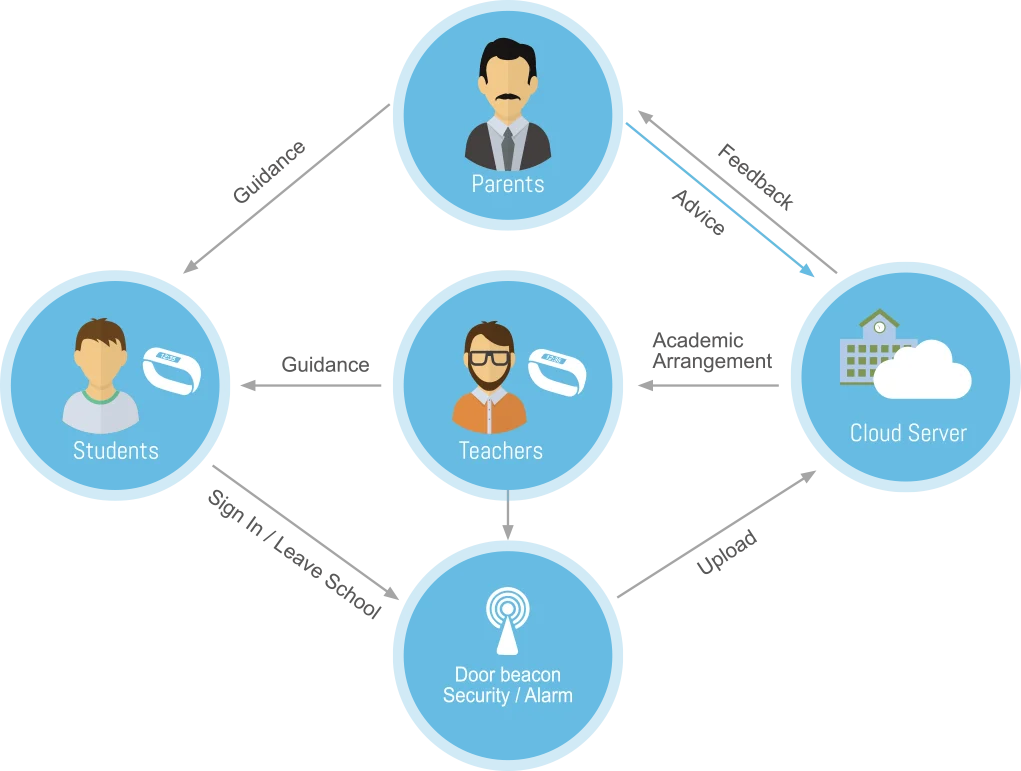
One of the key components of smart school solutions is the integration of wearables, such as J-Style wearables, which facilitate real-time monitoring of student engagement and well-being. These devices can track a variety of metrics, including physical activity, attention levels, and emotional states, providing valuable insights to educators and parents. This data-driven approach allows for timely interventions and supports the development of personalized learning plans.
Furthermore, the Data Hub plays a crucial role in synthesizing and analyzing the vast amounts of information generated by these wearables and other smart devices. By centralizing data, the Data Hub enables educators to make informed decisions based on comprehensive and up-to-date information. This holistic view of student performance and behavior can lead to more effective teaching strategies and improved educational outcomes.
Overall, the potential of smart school solutions to transform traditional education is immense. By embracing these technologies, schools can create more dynamic and responsive learning environments, ultimately preparing students for the demands of the future. As we continue to witness advancements in educational technology, the integration of smart school solutions will undoubtedly play a pivotal role in shaping the next generation of learners.
What are J-Style Wearables?
J-Style wearables are a cutting-edge category of smart devices specifically crafted for the educational sector. These wearables encompass a range of gadgets, including smartwatches, fitness bands, and smart badges, all designed to enhance the learning experience by leveraging advanced technology. Their primary purpose is to monitor and support student health, activity, and engagement in a school environment, thereby fostering a more connected and informed educational ecosystem.
One of the standout features of J-Style wearables is their ability to continuously track student health metrics. These devices can monitor vital signs such as heart rate, body temperature, and even sleep patterns. By collecting this data, educators and administrative staff can ensure that students are maintaining a healthy lifestyle, which is crucial for optimal learning and development. Additionally, any anomalies or health concerns can be promptly addressed, ensuring the safety and well-being of the student body.
Beyond health monitoring, J-Style wearables are equipped with functionalities to track physical activity. These devices record steps taken, distance covered, and calories burned, providing a comprehensive overview of a student’s physical activity levels. This information can be used to encourage students to stay active, participate in physical education programs, and achieve fitness goals. The integration of gamification elements, such as rewards and challenges, can further motivate students to engage in healthy behaviors.
Another significant aspect of J-Style wearables is their capacity to enhance student engagement. These devices can track attendance, participation in class activities, and even provide real-time feedback on student performance. For instance, smart badges can be used to check in and out of classrooms, track attendance, and ensure that students are present and engaged in their learning. This data can be invaluable for teachers, enabling them to identify students who may need additional support or intervention.
In summary, J-Style wearables offer a multifaceted approach to enhancing education through technology. By providing insights into student health, activity, and engagement, these devices help create a more informed and supportive learning environment. With various types of wearables available, each offering unique functionalities, schools can tailor their use of technology to meet specific educational needs and objectives.
The Role of Data Hub in Education
A data hub, at its core, is a centralized repository that consolidates data from multiple sources, enabling streamlined access, management, and analysis. In the realm of education, a data hub serves as a pivotal component in the ecosystem, facilitating the integration of diverse data streams into a cohesive, actionable framework. The advent of J-style wearables, which monitor student activities and health metrics, further enriches this ecosystem by providing real-time, granular data.
By leveraging the capabilities of a data hub, educational institutions can collect vast amounts of information from J-style wearables, traditional academic databases, and other digital tools. This collected data is then stored securely within the hub, ensuring that privacy and compliance standards are maintained. The ability to aggregate data from various sources into a single repository not only simplifies data management but also enhances the accuracy and comprehensiveness of the information available.
The analytical prowess of a data hub allows for the transformation of raw data into valuable insights. Educators can utilize these insights to tailor learning experiences to individual student needs, track progress, and identify areas where interventions may be necessary. For instance, data from J-style wearables can reveal patterns in physical activity that correlate with academic performance, enabling a holistic approach to student development.
Moreover, a centralized data hub offers significant benefits in terms of operational efficiency and decision-making. Administrators can access real-time data dashboards, facilitating prompt and informed decisions. The centralized nature of the data hub ensures that all stakeholders—teachers, parents, and administrators—have a unified view of student progress and school performance.
In essence, the integration of a data hub in the educational landscape is transformative. It not only optimizes the management of educational data but also enhances the ability to make data-driven decisions that can profoundly impact student outcomes. The synergy between J-style wearables and a robust data hub heralds a new era of smart school solutions, where data is harnessed to foster an enriched learning environment.
Integrating J-Style Wearables with Data Hub
Integrating J-style wearables with a data hub is a multi-faceted process that involves various technical requirements and compatibility considerations. This integration aims to create a seamless ecosystem where data from wearable devices is efficiently collected, processed, and analyzed, enhancing the educational experience.
First and foremost, the technical requirements include stable wireless connectivity, such as Wi-Fi or Bluetooth, to ensure real-time data transmission from the wearables to the data hub. Additionally, it is crucial to have a robust data hub with sufficient storage and processing capabilities to manage the influx of data. The data hub must support various data formats and possess advanced data analytics tools to derive actionable insights.
Compatibility is another critical factor. The J-style wearables must be compatible with the data hub’s software and hardware infrastructure. This often involves using standardized communication protocols and APIs (Application Programming Interfaces) to facilitate smooth data exchange. Compatibility ensures that data from the wearables is accurately captured and integrated into the data hub without any loss or corruption.
The steps involved in the integration process typically start with setting up the wearables and configuring them to connect with the data hub. This is followed by establishing secure data transmission channels to protect sensitive information. Once connected, the data hub begins to receive and store data from the wearables, which can then be processed and analyzed to provide valuable insights.
Successful integrations of J-style wearables with data hubs have been observed in several real-world educational settings. For instance, a school in Tokyo implemented this technology to monitor students’ physical activity and health metrics. The data collected was analyzed to tailor physical education programs to individual needs, resulting in improved student health and engagement. Another example is a university in Seoul where wearables were used to track attendance and academic performance, leading to enhanced student participation and academic outcomes.
In conclusion, the integration of J-style wearables with a data hub offers significant benefits for educational institutions. By addressing technical requirements and compatibility issues, schools can harness the power of data to foster a more personalized and effective learning environment.
Benefits of Smart School Solutions
The integration of J-style wearables and data hubs into educational environments brings a multitude of benefits that significantly enhance the learning experience. One of the primary advantages is the improvement in student engagement. By leveraging interactive and intuitive wearable technology, educators can create more captivating and immersive learning experiences. These devices provide real-time feedback and gamification elements, which keep students actively involved in their educational journey.
Personalized learning experiences are another key benefit of smart school solutions. J-style wearables allow for the collection of individualized data, enabling educators to tailor lessons and activities to each student’s unique needs and learning pace. This ensures that students receive the appropriate level of challenge and support, fostering a more effective and inclusive learning environment. Personalized learning also helps in identifying areas where a student might be struggling, allowing for timely intervention and support.
Enhanced safety and security represent a critical aspect of implementing smart school solutions. Wearables can be equipped with GPS tracking and emergency alert features, ensuring that school administrators can monitor students’ whereabouts and respond promptly to any potential threats. This technology can also facilitate secure access to school premises, reducing unauthorized entry and enhancing overall campus security.
Better health monitoring is another significant advantage provided by J-style wearables. These devices can track physical activity, monitor vital signs, and even detect early signs of health issues. This data can be used to promote healthier lifestyles among students and ensure that any medical conditions are promptly addressed. Health monitoring can also help in managing chronic conditions, ensuring that students receive the necessary care and support during school hours.
Finally, data-driven decision-making for educators and administrators is greatly enhanced through the use of smart school solutions. The data collected by wearables and data hubs offer valuable insights into student performance, attendance, and behavior. This information can inform curriculum development, resource allocation, and overall educational strategies, leading to more informed and effective decision-making processes. By utilizing this data, schools can continuously improve and adapt their educational practices to better meet the needs of their students.
Challenges and Solutions
Adopting J-style wearables and data hubs in educational environments presents various challenges that schools must navigate to ensure successful implementation. One primary concern is data privacy. With the influx of wearable technology, the collection and management of student data become critically important. Schools must establish robust data protection protocols to ensure student privacy is maintained. Implementing encrypted data storage and stringent access controls can mitigate privacy risks, ensuring that sensitive information remains secure.
Another significant challenge is the cost associated with integrating J-style wearables and data hubs into the school infrastructure. The initial investment for purchasing wearables and upgrading existing systems can be substantial. To address this, schools can explore funding opportunities such as grants and partnerships with technology companies. Additionally, adopting a phased implementation approach can help distribute costs over time, making the transition more financially manageable.
Technical barriers also pose a significant hurdle. Integrating new technology requires a level of expertise that may be lacking in some educational institutions. Schools must invest in training programs for both educators and IT staff to ensure they are well-equipped to handle the new systems. Partnering with technology providers who offer comprehensive support and training can facilitate smoother integration, reducing the potential for technical issues.
Resistance to change is another common challenge. Introducing new technology can be met with skepticism from both staff and students who are accustomed to traditional methods. To overcome this, schools should engage in open communication, explaining the benefits and addressing concerns. Providing hands-on demonstrations and pilot programs can help ease the transition, showing firsthand how J-style wearables can enhance the learning experience.
By addressing these challenges proactively, schools can pave the way for a seamless transition to smart school systems. Emphasizing data privacy, managing costs effectively, overcoming technical barriers, and fostering acceptance among the school community are crucial steps in ensuring the successful adoption of J-style wearables and data hubs in education.
Case Studies and Success Stories
Several educational institutions have embraced J-style wearables and data hubs, yielding remarkable results in student performance, teacher productivity, and overall school efficiency. By integrating smart school solutions, these schools have transformed their learning environments, fostering a more interactive and data-driven approach to education.
One notable case is Greenfield Academy, which implemented J-style wearables in their physical education program. These wearables tracked students’ physical activity and provided real-time feedback, leading to a 25% improvement in overall student fitness levels. “The data-driven insights allowed us to tailor our PE curriculum to meet each student’s needs,” said Coach Williams, a PE teacher at Greenfield Academy. Parents also noted a positive change in their children’s enthusiasm towards physical activities.
Another success story is from Riverview High School, where data hubs were utilized to monitor academic performance and attendance. By analyzing data collected through wearables, the school identified patterns in student behavior and learning habits. This information enabled teachers to offer personalized support to students struggling with specific subjects. As a result, the school witnessed a 15% increase in average test scores and a significant reduction in absenteeism. “The ability to track and respond to data in real-time has been a game-changer for our educational approach,” remarked Principal Johnson.
In addition, Oakwood Elementary School saw notable improvements in classroom management and student engagement by integrating J-style wearables with their existing technology infrastructure. Teachers could monitor student participation and provide instant feedback, fostering a more engaged learning environment. Mrs. Thompson, a 3rd-grade teacher, shared, “The wearables have made it easier to keep students focused and motivated. The immediate feedback helps them stay on track, and I’ve seen a marked improvement in their academic performance.”
Parents have also expressed their satisfaction with the implementation of smart school solutions. “Since the introduction of J-style wearables, I’ve noticed my daughter is more engaged and motivated in her studies. The data-driven insights have allowed her teachers to provide the support she needs to succeed,” commented Mrs. Rivera, a parent at Oakwood Elementary School.
These case studies underscore the positive impact of J-style wearables and data hubs on education. By leveraging these smart school solutions, institutions can enhance student outcomes, streamline teacher workflows, and create a more efficient and effective learning environment.
Future Trends in Smart School Solutions
The future of smart school solutions is poised for transformative changes, driven by rapid advancements in technology and innovative approaches to education. Among the most promising trends are the integration of artificial intelligence (AI) and machine learning algorithms into educational platforms, which can personalize learning experiences for students by adapting content to their individual needs and preferences. This form of adaptive learning is expected to enhance student engagement and improve learning outcomes significantly.
In the realm of wearables, emerging technologies promise to revolutionize how students interact with their learning environment. Advanced J-Style wearables, which include smartwatches and fitness trackers, are being developed to monitor not only physical activity but also cognitive and emotional states. These wearables can provide real-time feedback to both students and educators, enabling a more responsive and supportive educational experience. For instance, wearables that track stress levels could alert teachers to students who may need additional support, thereby fostering a more empathetic and effective learning atmosphere.
Data hubs will continue to play a crucial role in the future of smart school solutions by centralizing and analyzing vast amounts of data generated from various sources. These hubs will utilize big data analytics to identify trends, predict outcomes, and provide actionable insights. For example, data collected from wearables and other smart devices can be aggregated to monitor overall student well-being and academic performance, allowing schools to implement timely interventions and support systems.
Moreover, the integration of the Internet of Things (IoT) in educational settings is anticipated to enhance connectivity and streamline operations. IoT-enabled devices, such as smart boards and interactive learning tools, can create a more interactive and engaging classroom environment. These devices, connected through a comprehensive data hub, can provide seamless communication and collaboration opportunities, further enriching the learning experience.
As these trends evolve, the continuous improvement of learning environments will become more achievable. The adoption of these advanced technologies will not only enhance educational outcomes but also prepare students for a future where digital literacy and adaptability are paramount. The fusion of J-Style wearables, data hubs, and other emerging technologies heralds a new era in education, one that promises to be more personalized, efficient, and inclusive. For more information, follow this link: Smart School